

 English
 Español
 简体中文
简体中文
Thank you very much for your attention to our 775g...
See DetailsAchieving consistent spray distribution across large planting areas requires more than steady walking speed and correct chemical mixing. Equipment configuration plays a central role in how evenly liquid is delivered to crop surfaces. When an Agricultural High Pressure Spray Nozzle is paired with a High Pressure Adjustable Chemical Spray Gun, operators gain greater control over droplet formation, spray angle, and projection distance. These mechanical factors directly influence whether treated areas receive balanced coverage or show visible streaking and uneven wetting.
Uniform field coverage is not simply about applying more liquid; it involves matching droplet size, spray pattern, and pressure settings to crop structure and environmental conditions. Understanding how the nozzle contributes to this balance helps clarify its role in practical field operations.
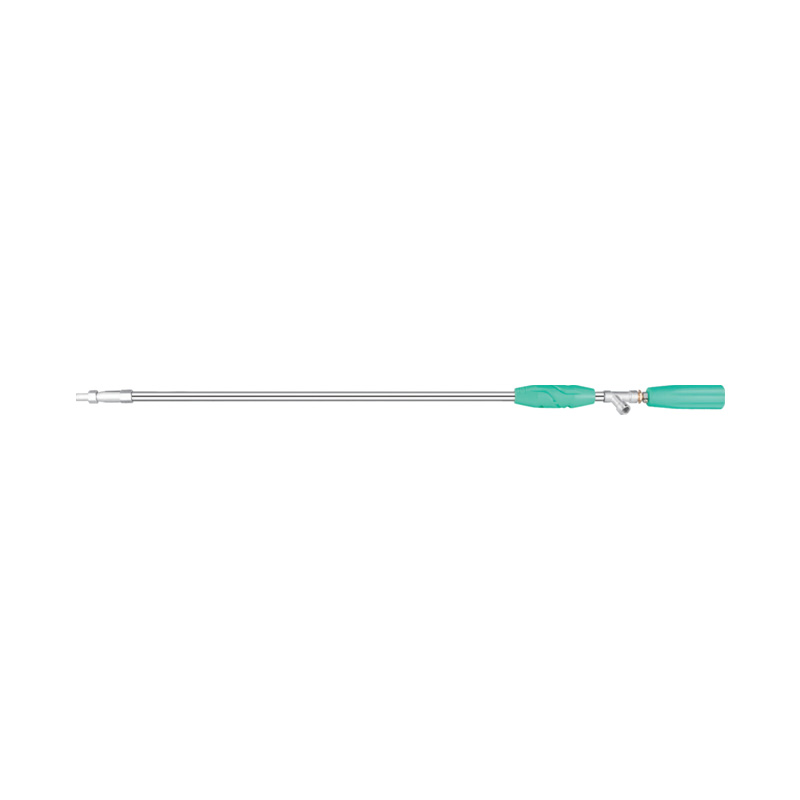
The internal structure of an Agricultural High Pressure Spray Nozzle determines how liquid exits the system. Inside the nozzle body, flow channels guide pressurized liquid toward a shaped outlet opening. The geometry of this outlet affects how the liquid sheet breaks into droplets. When the channel dimensions remain consistent and unobstructed, spray distribution across the selected angle becomes more predictable.
Uniform coverage begins with controlled atomization. If droplets vary significantly in size, some areas may receive excess liquid while others remain lightly coated. A properly functioning nozzle produces droplets within a consistent range under a given pressure setting. When connected to a High Pressure Adjustable Chemical Spray Gun, the operator can regulate pressure to maintain stable droplet behavior throughout the spraying session.
Another factor is spray angle. Fan-shaped patterns are commonly used for field crops because they distribute liquid in a horizontal band. The width of this band influences how much overlap occurs between passes. If the angle remains stable during operation, operators can maintain consistent overlap and reduce visible striping across the field.
Uniform coverage depends on maintaining steady pressure during application. The High Pressure Adjustable Chemical Spray Gun allows gradual control over flow intensity, which directly influences droplet projection and distribution. Too much pressure may create overly fine droplets that drift, while insufficient pressure may produce heavy droplets that fall unevenly.
Field conditions change throughout the day. Temperature variations can alter liquid viscosity, and slight wind shifts can affect droplet movement. Adjusting pressure in response to these changes helps maintain balanced coverage. Rather than keeping one fixed setting, operators can make small corrections to maintain consistent spray behavior.
For example, when moving from open sections of a field to areas bordered by windbreaks or structures, pressure adjustments may be necessary to maintain similar coverage patterns. Because the spray gun provides responsive control, these modifications can be made without interrupting workflow.
Uniform field coverage requires correct overlap between adjacent spray passes. Even with a stable nozzle, uneven walking speed or inconsistent spacing can result in untreated strips. The Agricultural High Pressure Spray Nozzle supports uniformity by maintaining a steady fan pattern that simplifies alignment during movement.
Operators typically aim for a specific percentage of overlap to ensure complete coverage. Consistent spray width helps maintain this target. If the fan narrows unexpectedly due to partial blockage or pressure drop, overlap decreases and streaking may occur.
To maintain steady overlap, operators should periodically check:
If any visible banding appears on treated surfaces
Brief visual inspections during spraying sessions help identify irregularities early, allowing corrective action before large sections are affected.
Droplet size influences how evenly chemicals adhere to leaves and stems. Very fine droplets may drift beyond the intended area, while very large droplets can accumulate in concentrated spots. A balanced droplet range supports consistent wetting across plant surfaces.
The combination of an Agricultural High Pressure Spray Nozzle and adjustable spray gun allows operators to influence droplet characteristics by modifying pressure. Lower pressure settings typically produce larger droplets, while higher pressure creates smaller particles. The goal is not to pursue extremes but to select a range that supports stable deposition under current field conditions.
Uniform wetting also depends on consistent walking speed and nozzle height relative to crop canopy. Holding the nozzle at a steady distance from plants helps maintain similar droplet impact across rows. Equipment design that reduces vibration or recoil assists operators in maintaining this steady positioning.
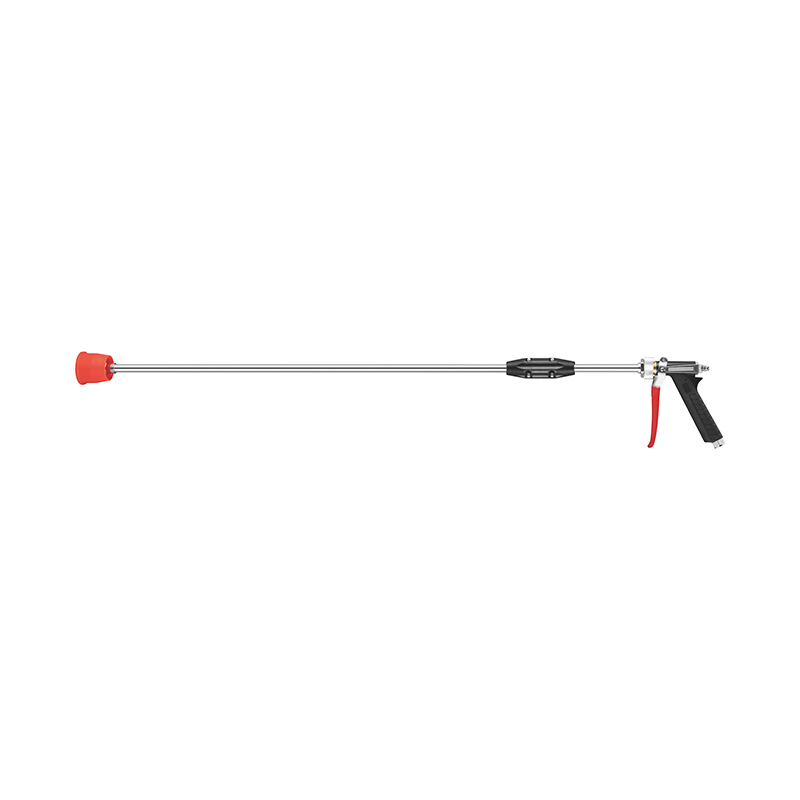
Thank you very much for your attention to our 775g...
See Details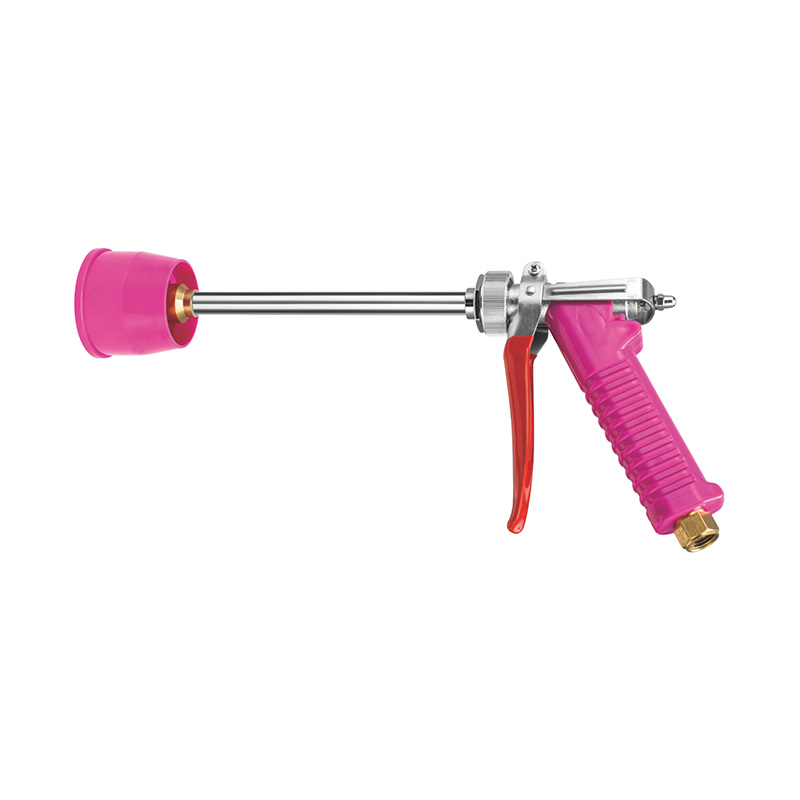
Thank you very much for your interest in our High-...
See Details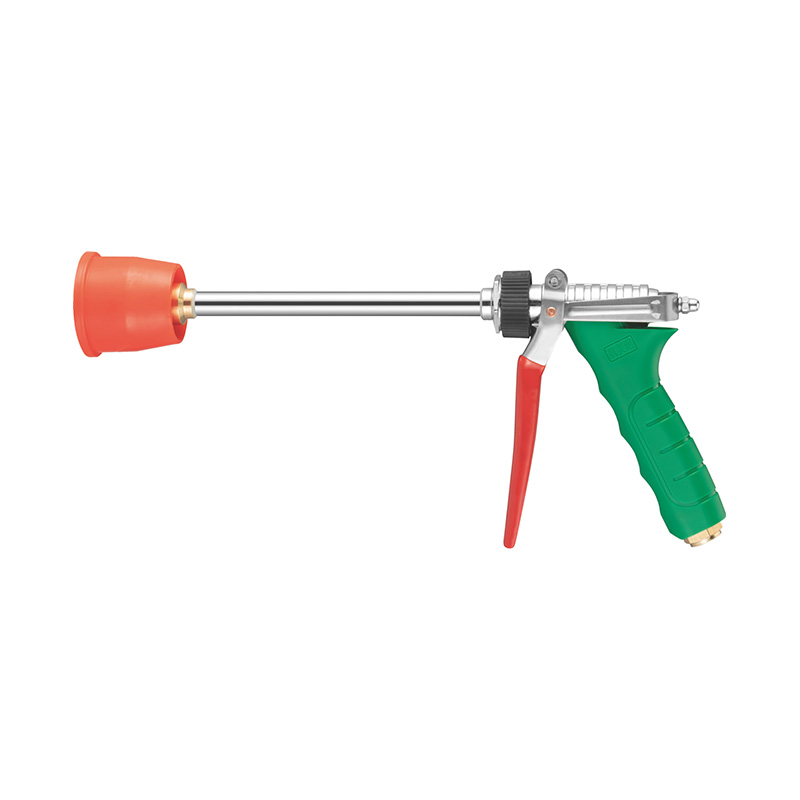
This 326g plastic handle long gun agricultural sup...
See Details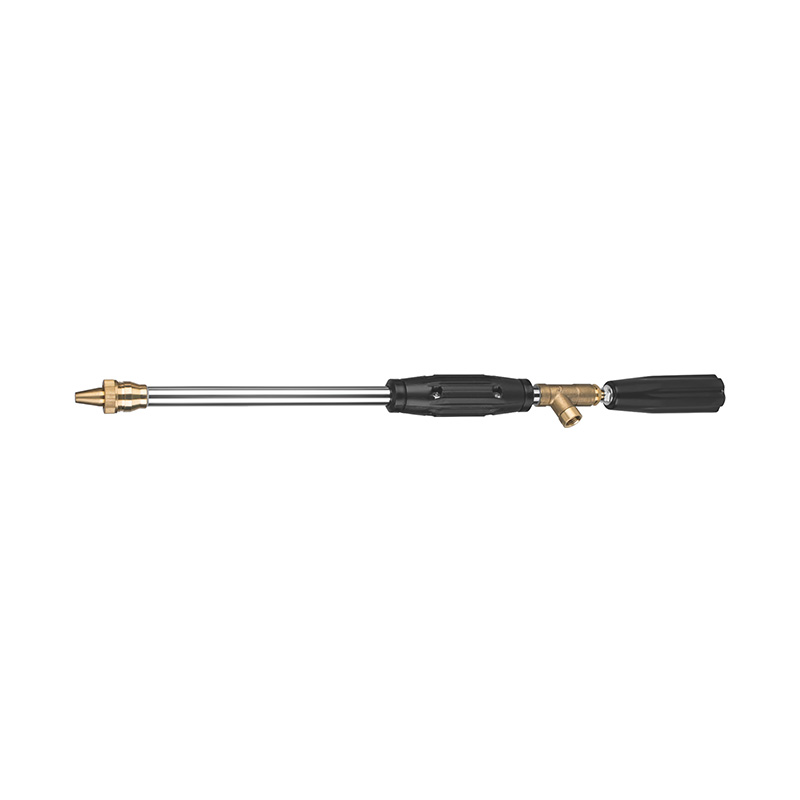
We are proud to introduce our 40/60/90cm weighted ...
See DetailsContinuous innovation
We firmly believe that through continuous development, our products will be able to adapt to the changing market environment, and we can provide users with better and more reliable solutions.
let’s talk