

 English
 Español
 简体中文
简体中文
This 387g large horn windproof short-gun spray gun...
See DetailsSpray consistency in agricultural operations depends not only on equipment quality but also on proper adjustment and regular verification. When using an Agricultural High Pressure Spray Nozzle together with a High Pressure Adjustable Chemical Spray Gun, pressure settings directly influence droplet size, spray pattern, and overall coverage. Over time, changes in chemical formulation, component wear, and environmental conditions can alter how the system performs. Knowing when to calibrate pressure is essential for maintaining stable application results and avoiding uneven treatment across crops.
Calibration is not a one-time action. It should be part of routine equipment management. The following sections explain practical situations where pressure recalibration becomes necessary and how operators can recognize the signs.
Seasonal transitions often bring changes in crops, chemicals, and storage conditions. Equipment that has been unused for several weeks or months may not perform exactly as it did previously. Internal seals in the High Pressure Adjustable Chemical Spray Gun can stiffen, and nozzle openings may accumulate residue if cleaning was incomplete at the end of the previous season.
Before the major spraying session of the year, pressure calibration should be performed. This involves checking whether the pressure reading corresponds accurately to the intended spray output. Operators should fill the tank with clean water and observe spray pattern stability. If droplet formation appears inconsistent or the projection distance differs from past records, recalibration is necessary.
Seasonal calibration ensures that early crop treatments are applied evenly. Young plants are often more sensitive to dosage variations, making early adjustments especially important.
Different agricultural chemicals have varying viscosities and flow behaviors. Switching from a low-viscosity herbicide to a thicker foliar nutrient solution may alter how pressure is transmitted through the nozzle.
Pressure calibration should be considered whenever:
Even if the spray gun setting remains unchanged, internal resistance within the nozzle may shift slightly. Calibrating pressure after chemical changes helps maintain predictable droplet size and spray distance. Operators can perform a brief test spray to compare flow rate against standard application guidelines.
Skipping recalibration after formulation changes may result in uneven distribution, particularly across mixed-crop farms where different treatments are applied in sequence.
The Agricultural High Pressure Spray Nozzle is designed to produce a consistent distribution shape at specific pressure ranges. If the fan pattern narrows unexpectedly, droplets cluster unevenly, or projection distance fluctuates, the system may be operating outside its intended range.
Irregular patterns can stem from several causes: partial nozzle blockage, wear in internal channels, or slight variations in pump output. While cleaning may resolve some issues, calibration verifies whether the pressure level matches the intended setting.
Operators should observe the following signs during routine spraying:
When these signs appear, pressure calibration should be performed before continuing large-scale application.
Routine maintenance extends the service life of both the spray gun and nozzle. However, replacing seals, springs, or nozzle heads may slightly alter internal pressure dynamics. Even small dimensional differences between parts can influence how liquid flows through the system.
Following maintenance, calibration ensures that the High Pressure Adjustable Chemical Spray Gun responds accurately to trigger adjustments. Operators should confirm that the pressure gauge reading aligns with actual spray output. A brief water-only test helps verify droplet formation and spray angle.
Maintenance without recalibration may create subtle inconsistencies. While the equipment may function, application rates could differ from expected values. Regular verification avoids unintended variation across treated areas.tem can restrict flow over time.
On large farms where spraying continues for several hours, it is practical to check pressure levels periodically. This does not require full disassembly. Instead, operators can compare current spray behavior with initial settings recorded earlier in the day.
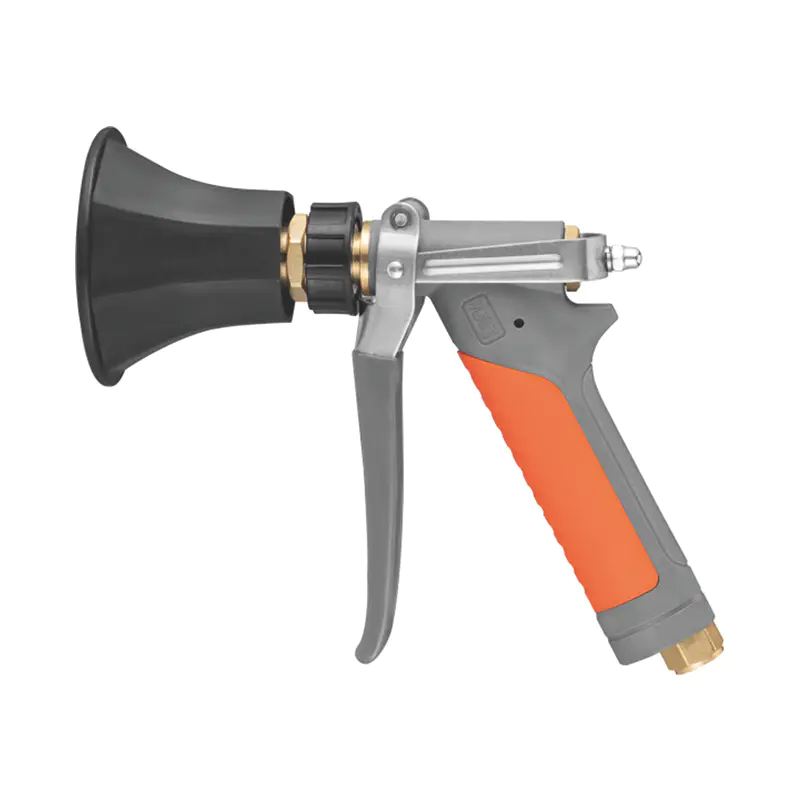
This 387g large horn windproof short-gun spray gun...
See Details
In agricultural production, choosing the right spr...
See Details
Dear buyers, Hangyuan is honored to have the oppor...
See Details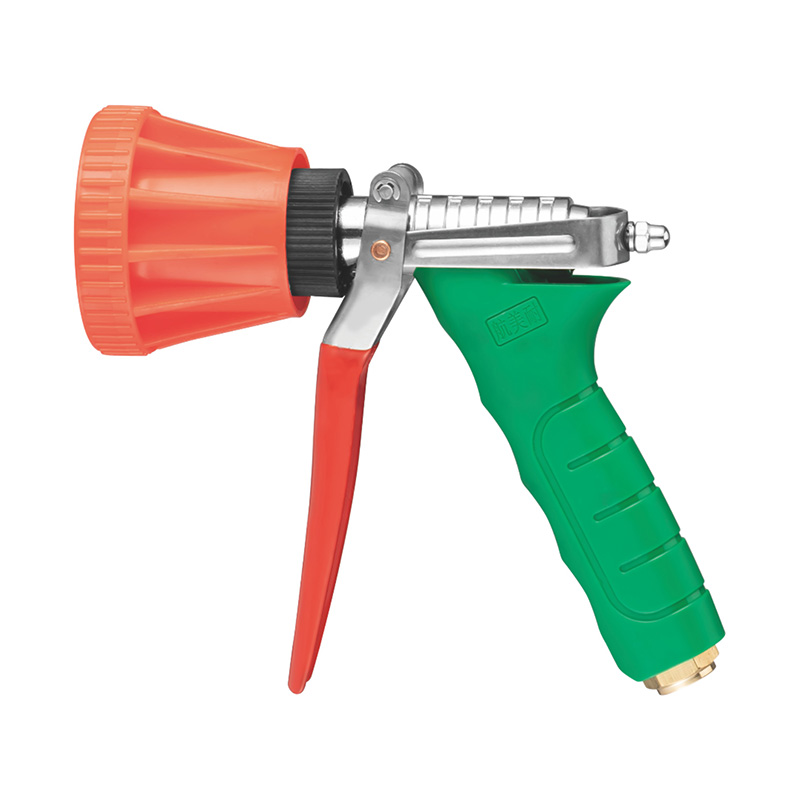
Dear customer, I am very happy to introduce to you...
See DetailsContinuous innovation
We firmly believe that through continuous development, our products will be able to adapt to the changing market environment, and we can provide users with better and more reliable solutions.
let’s talk