

 English
 Español
 简体中文
In agricultural production, we often face interfer...
See DetailsAgricultural spraying equipment is often used repeatedly throughout planting and growing seasons. For farm operators, a spray gun needs to remain easy to handle, respond consistently, and connect securely to the existing spraying system. For distributors and agricultural equipment importers, product selection also involves maintenance requirements, replacement parts, and the ability to maintain consistent quality across bulk orders. A Straight Agricultural Spray Gun may have a relatively simple external structure, but its internal valve, trigger assembly, sealing components, and material selection all influence its suitability for regular fieldwork.
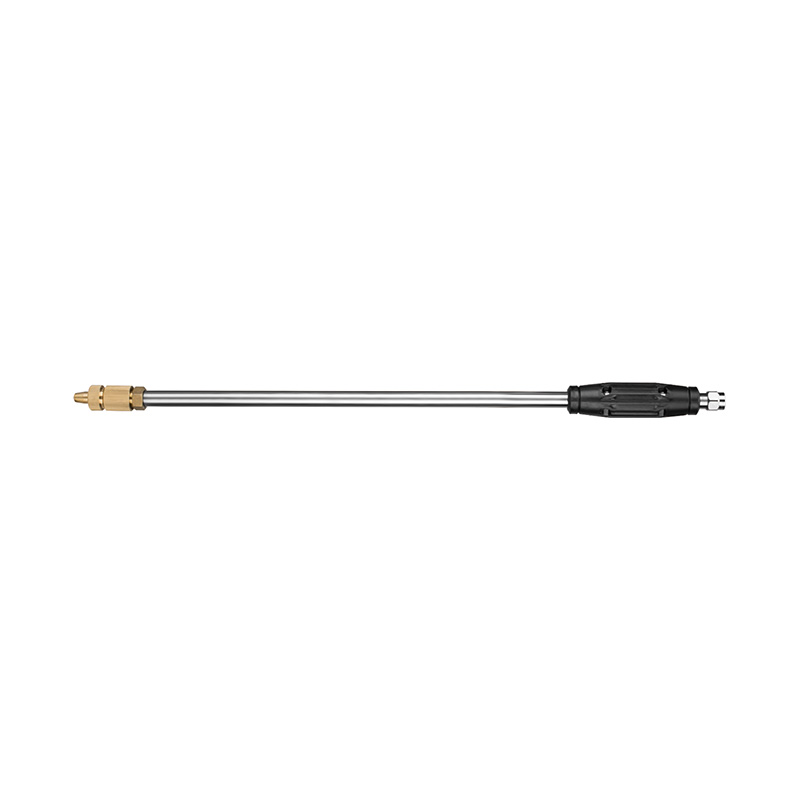
The trigger is one of the components operators interact with frequently. During extended spraying tasks, an uncomfortable grip or inconsistent trigger response can make operation less convenient.
Buyers should examine the trigger position, travel distance, return action, and overall grip design. The trigger should operate in a predictable manner under the product's specified working conditions. Its connection to the internal valve also deserves attention, since poor assembly may affect opening and closing performance.
From a manufacturing perspective, the trigger mechanism should be considered as part of the complete valve assembly rather than an isolated external component. Consistent component fitting and assembly checks help support reliable operation.
Leakage around the trigger, joints, or hose connection can create inconvenience during agricultural work. It may also result in unnecessary liquid loss and require operators to stop and inspect the equipment.
The sealing materials need to suit the intended liquid and operating environment. Compatibility should be confirmed according to the chemical formulation, concentration, temperature, and manufacturer's specifications.
When evaluating a spray gun supplier, buyers can ask about the sealing structure, material options, and inspection procedures. It is also useful to understand whether seals can be replaced separately or whether the complete assembly must be changed when maintenance is required.
Agricultural spray guns are commonly connected to pumps, hoses, and other application equipment. However, connection standards and fitting dimensions may vary between markets and equipment types.
Before placing an order, buyers should confirm:
These details are particularly important for distributors supplying replacement accessories. A spray gun that performs well but does not fit the customer's existing equipment may create additional purchasing and installation difficulties.
Agricultural spraying equipment may encounter moisture, sunlight, dust, fertilizers, and different chemical solutions. The body material and internal components should therefore be selected according to the intended application.
A metal body may offer a different handling experience from a reinforced polymer design, while internal seals and valve components require their own compatibility assessment. Buyers should avoid judging material suitability from appearance alone.
Manufacturers should provide clear material information and explain any application limitations. This allows distributors to recommend products according to actual operating conditions rather than making broad claims about chemical resistance or service life.
After spraying, liquid residue may remain inside the nozzle, valve passage, and connection area. If these components are not cleaned properly, deposits may interfere with the next operation.
A practical design should allow users to follow the recommended cleaning procedure without unnecessary difficulty. Buyers should review whether the nozzle can be removed for cleaning, whether replacement components are available, and what maintenance instructions accompany the product.
For professional users, simple maintenance arrangements can make equipment management easier, especially when several spray guns are used across different working areas.
A spray gun may look acceptable while still having problems with internal sealing, trigger movement, or connection accuracy. For wholesale buyers, this makes production inspection an important part of supplier evaluation.
A manufacturer's inspection process can include checks for:
The exact inspection requirements should be agreed upon according to product specifications and intended applications. Clear acceptance criteria also make communication easier when buyers place repeat orders.
The purchase price is only one part of agricultural spray gun procurement. Product compatibility, maintenance requirements, replacement components, and production consistency can also influence the overall cost of supplying customers.
For overseas buyers sourcing a Straight Agricultural Spray Gun, discussing the intended spraying system, liquid compatibility, connection requirements, and expected usage frequency with the manufacturer can help narrow down suitable configurations. By paying attention to trigger construction, sealing performance, material selection, and inspection procedures, buyers can make more informed sourcing decisions and develop a product range that better serves professional agricultural users.

In agricultural production, we often face interfer...
See Details
As a professional manufacturer, Hangyuan always ha...
See Details
I am pleased to introduce to you the agricultural ...
See Details
Welcome to the website of Hangyuan Factory! We are...
See DetailsContinuous innovation
We firmly believe that through continuous development, our products will be able to adapt to the changing market environment, and we can provide users with better and more reliable solutions.
let’s talk