

 English
 Español
 简体中文
简体中文
Dear buyers, Hangyuan is honored to have the oppor...
See DetailsIn the realm of modern agriculture and garden maintenance, efficiency and precision in liquid application are fundamental. The integration of a Garden High Pressure Spray Gun with an Agricultural Pressure Adjustable Nozzle offers users significant flexibility, allowing for tailored approaches to various tasks. A common question arises: where exactly should one apply the different settings available on these adjustable nozzles? Understanding the specific applications for each spray mode can help in achieving more effective and resource-conscious outcomes, supporting both crop health and operational efficiency.
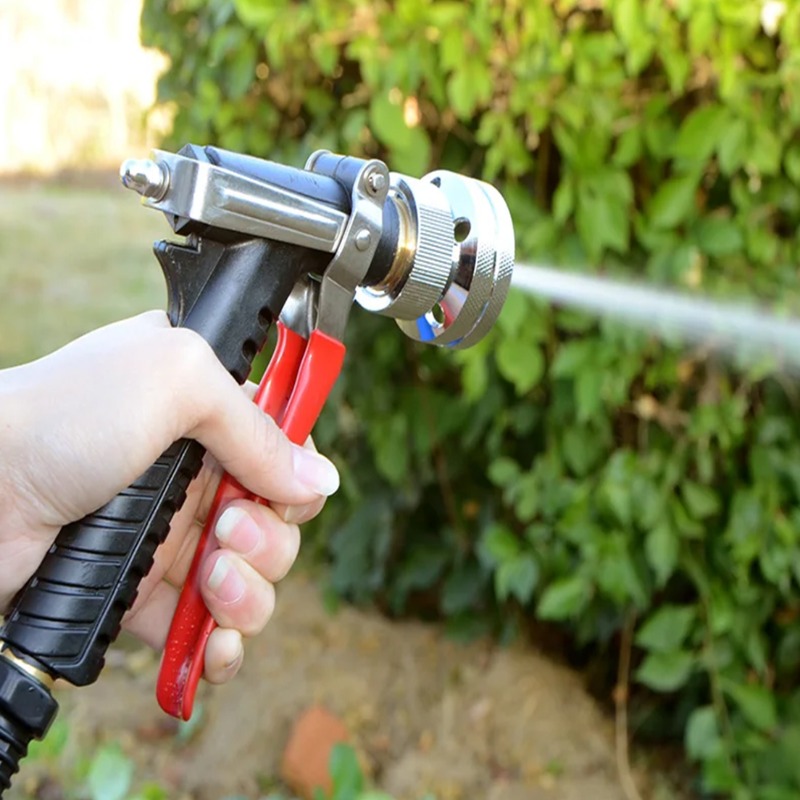
Agricultural pressure adjustable nozzles are designed to modify the spray pattern, droplet size, and flow rate by altering the nozzle's aperture or internal settings. This adaptability is central to addressing diverse agricultural requirements without the need for multiple, fixed nozzles. Typically, these nozzles offer a range of modes from a fine mist to a solid jet, with variations like fan sprays, cone sprays, and straight streams in between. The mechanism relies on precision components, such as seals and fittings, which influence the consistency and control of the output. By rotating or adjusting the nozzle tip, users can select a mode suited to factors like target surface area, plant density, and the type of liquid being applied—be it water, fertilizer, or pesticide. This functionality underscores the role of well-machined accessories in maintaining pressure stability and pattern uniformity, which contributes to the overall performance of the spray system.
One of the primary settings on an agricultural pressure adjustable nozzle is the wide-angle fan spray. This pattern disperses liquid in a broad, flat arc, creating a wide coverage area with each pass. It is particularly suited for applications where uniform distribution over a large surface is needed. In agricultural contexts, this mode is often used for pre-emergent herbicide application on open fields or for administering foliar fertilizers over row crops like cereals or leafy vegetables. The wide spray reduces the number of passes required, supporting time management. In garden settings, when attached to a high-pressure spray gun, this mode can be effective for watering lawns or washing down patios and driveways, where broad, even coverage is beneficial. Key considerations include maintaining a consistent height and overlap between passes to avoid streaks or missed spots, ensuring the liquid is deposited evenly.
Cone spray patterns, which include hollow-cone and full-cone variants, produce a circular coverage area with droplets that can penetrate plant canopies more effectively. This makes them valuable for tasks requiring deeper reach into foliage. In agriculture, hollow-cone sprays are frequently employed for insecticide or fungicide application on fruit trees, vines, or dense crops like tomatoes, as the swirling droplet pattern can help coat the undersides of leaves and stems. Full-cone sprays, with a more solid distribution, may be used for irrigation or soil drenching around the base of plants. When using a garden high-pressure spray gun, the cone setting can aid in cleaning tasks such as removing debris from garden beds or applying treatments to shrubbery, where targeted yet thorough coverage is needed. Adjusting the pressure to avoid drift or runoff is important, especially in windy conditions, to keep the application focused.
The straight stream or jet mode concentrates the liquid into a narrow, forceful column, delivering high impact over a small area. This setting is indispensable for scenarios that require direct, focused application. In agricultural operations, it is commonly used for spot treatments, such as applying herbicides to individual weeds, cleaning clogged irrigation lines, or washing equipment. The precision of this mode helps in reducing waste by limiting spray to only the intended targets. For garden high-pressure spray guns, the straight stream is ideal for tasks like removing stubborn dirt from tools, blasting pests off plants, or reaching distant areas in large gardens. It is important to manage the pressure to prevent damage to delicate plants or soil erosion; starting with lower pressure and increasing as needed can help balance effectiveness with care.
Fine mist settings produce very small droplets that can float and settle gently over surfaces, providing uniform coverage with lower volume. This mode is advantageous for applications where thorough, light coating is essential. In agriculture, it is often used for applying growth regulators, certain pesticides on sensitive crops, or for humidity control in greenhouses. The mist helps in achieving even deposition on all plant parts without excessive runoff. In garden use, a high-pressure spray gun with a mist setting can be suitable for watering seedlings, misting hanging baskets, or applying horticultural oils to plants without causing stress. Due to the potential for drift, this mode is used in calm weather and may require more frequent calibration to ensure droplet size remains consistent, which ties back to the reliability of nozzle accessories in maintaining spray quality.
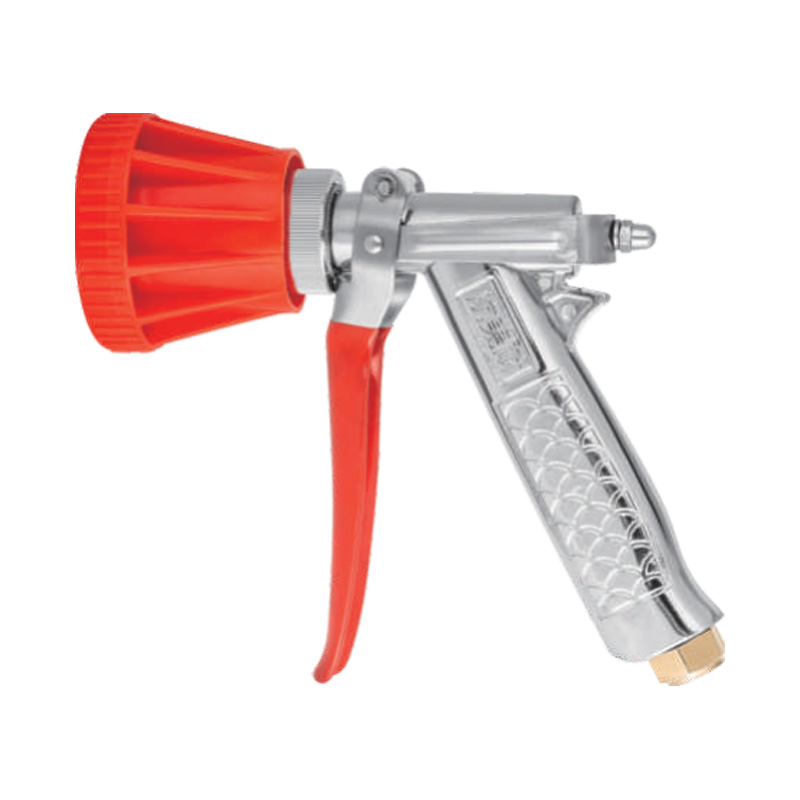
Dear buyers, Hangyuan is honored to have the oppor...
See Details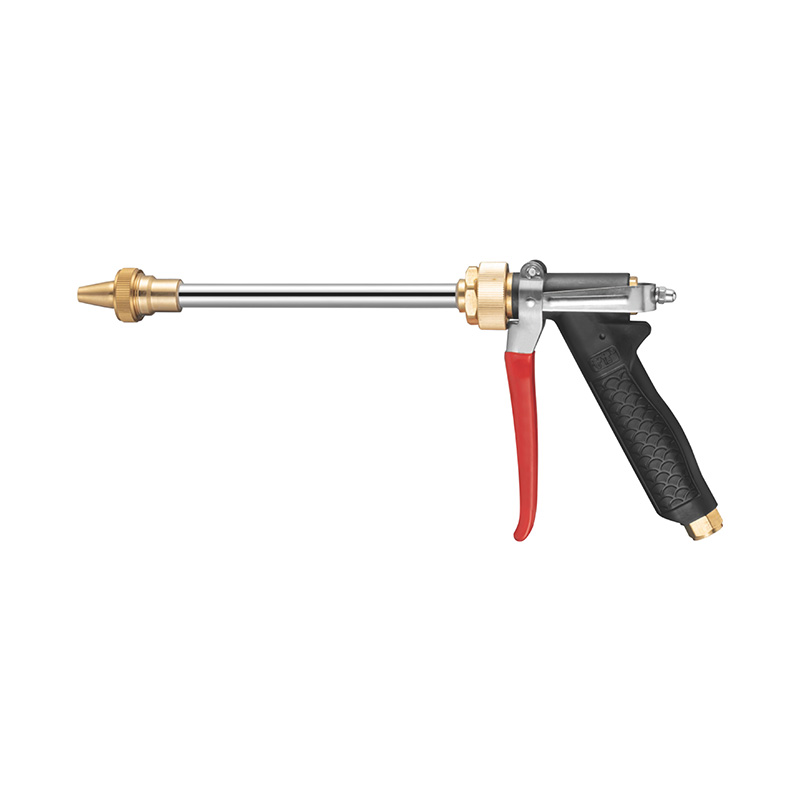
I am honored to introduce to you the 489g brass ti...
See Details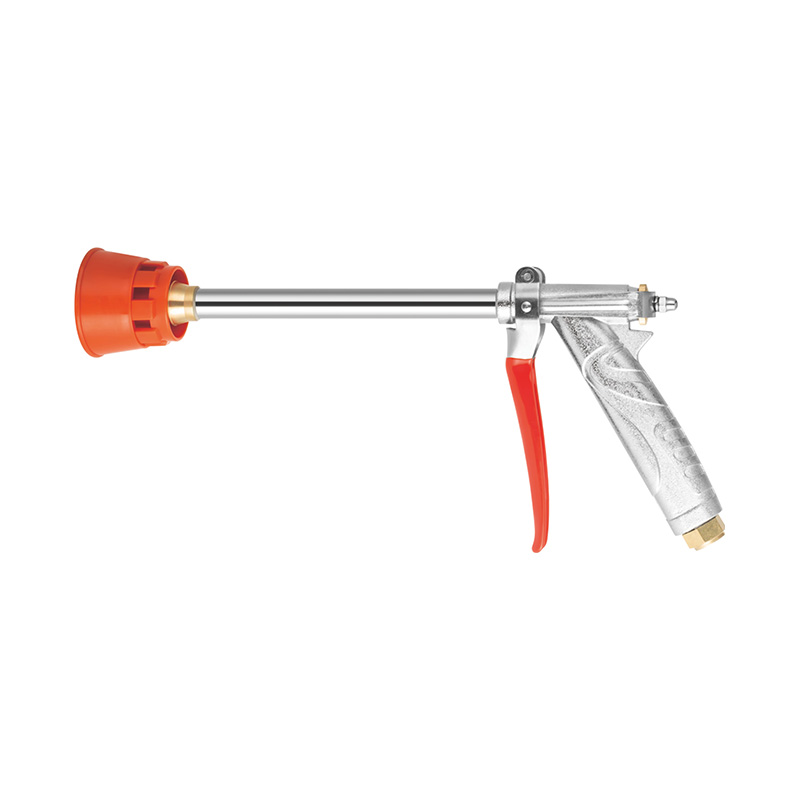
This high-precision, fine, and uniform atomization...
See Details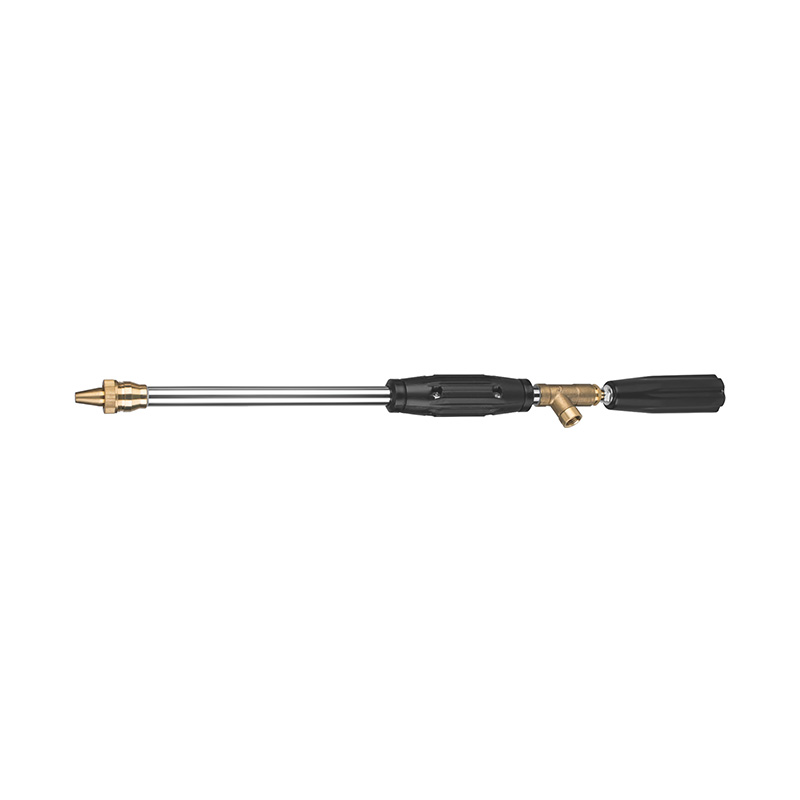
We are proud to introduce our 40/60/90cm weighted ...
See DetailsContinuous innovation
We firmly believe that through continuous development, our products will be able to adapt to the changing market environment, and we can provide users with better and more reliable solutions.
let’s talk