

 English
 Español
 简体中文
简体中文
As a professional farmland spraying tool, Hangyuan...
See DetailsGetting the spray mix evenly on all the plants is a big goal for any farmer. It does not just happen by luck. How well the spray covers the crop depends a lot on the pressure of the system, how the liquid moves through it, and the build of the nozzle tip. In many fields today, using an Agricultural High Pressure Spray Nozzle together with a High Pressure Adjustable Chemical Spray Gun helps keep the spray pattern the same across different parts of the field. When these parts are set up right and kept clean, they help put the spray down in a more even way. This means less chemical is wasted, and the farmer gets more of the same result each time.
The way the spray spreads out matters a lot for how well pesticides, weed killers, and plant food work on the leaves. If the spray pattern is not steady, some drops might be too big, or the pressure might go up and down. The angle of the spray might change too. When this happens, some plants get too much chemical, and other plants do not get enough. Understanding how the nozzle is made and how the pressure control works helps the people doing the spraying make better choices every day.
The inside shape of the nozzle is where spray consistency starts. The Agricultural High Pressure Spray Nozzle has very exact holes and paths inside that control how the liquid comes out. How big the hole is and what shape it is decides what the drops look like. Inside, there might be a swirl chamber or just a straight path. This decides if the spray comes out in a cone shape, a fan shape, or a straight stream.
When the pressure is high, the liquid gets pushed hard through the small hole. If the inside parts are smooth and made well, with no rough spots, the liquid comes out in a nice, even shape. If there is anything rough inside the nozzle, it can push the liquid off course. This makes the spray pattern uneven. When the high-pressure setup is matched right with the pump, the liquid breaks up into a steady mist. Instead of big, uneven drops, the nozzle makes a more uniform spray that works well for field crops or trees in an orchard.
The stuff the nozzle is made of also matters. Materials that do not wear down fast help keep the hole the same size for a long time. If the hole gets bigger because sand or small bits in the liquid rub against it, the spray angle gets wider. More liquid comes out than it should. Then, if one nozzle on the boom is old and worn, and another is new, the coverage will not be the same across the whole width. A good nozzle is made to resist wear and keep its spray shape even after a lot of use.
The nozzle design decides what the spray should look like. But what happens out in the field depends a lot on keeping the pressure steady. The High Pressure Adjustable Chemical Spray Gun lets the person spraying change the output based on what kind of crop it is, how tall the plants are, and how far away the target is. Changes in pressure are a big reason why spray patterns get uneven.
An adjustable spray gun helps keep flow steady by doing a few things. It has a trigger that lets the user control the pressure coming out. It lets the user make slow changes to the pressure instead of sudden jumps. It helps keep the spray coming out at a steady rate, even during long spraying jobs. It also stops sudden rushes of liquid that could mess up the spray angle.
When the pressure stays the same, the size of the drops stays in a range that the user expects. If the pressure drops too much, the drops get bigger, and the coverage gets patchy. If the pressure gets too high, the drops can get very fine. This makes them more likely to blow away in the wind, and less of the chemical lands on the plant where it is needed. Steady pressure also means that when a spray boom has many nozzles, they all work the same. If the pressure changes even a little between different sections of the boom, it can leave streaks in the field. Adjustable spray guns give the user fine control, which helps keep things even across the whole job.
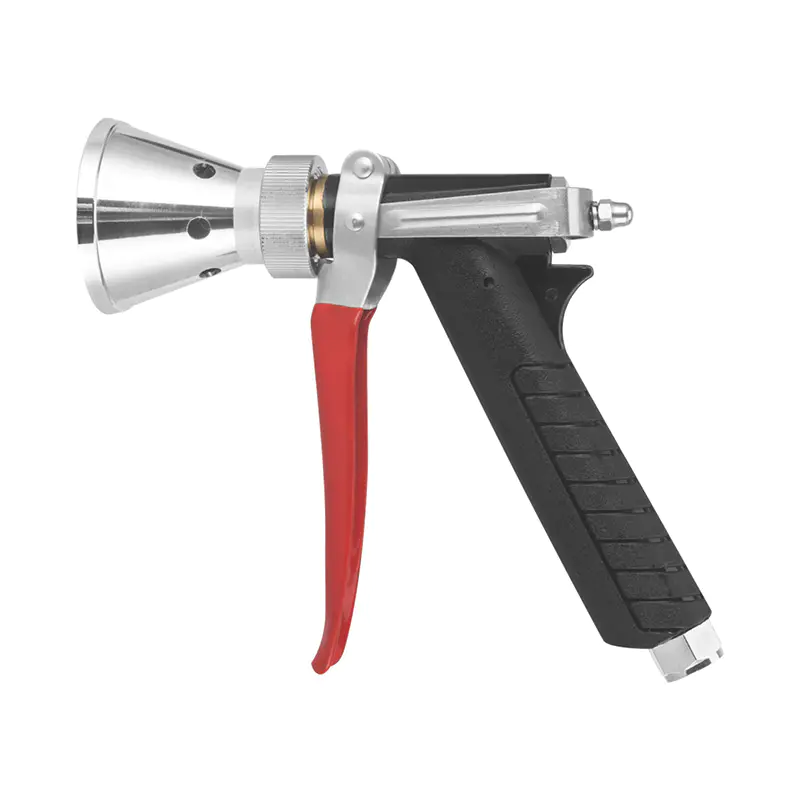
As a professional farmland spraying tool, Hangyuan...
See Details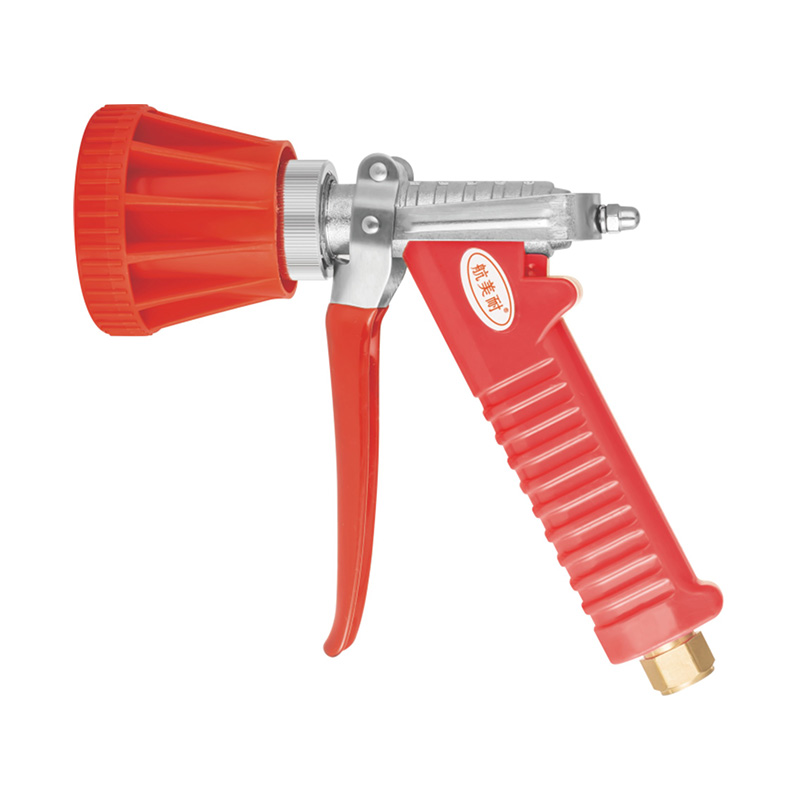
As a professional manufacturer, Hangyuan always ha...
See Details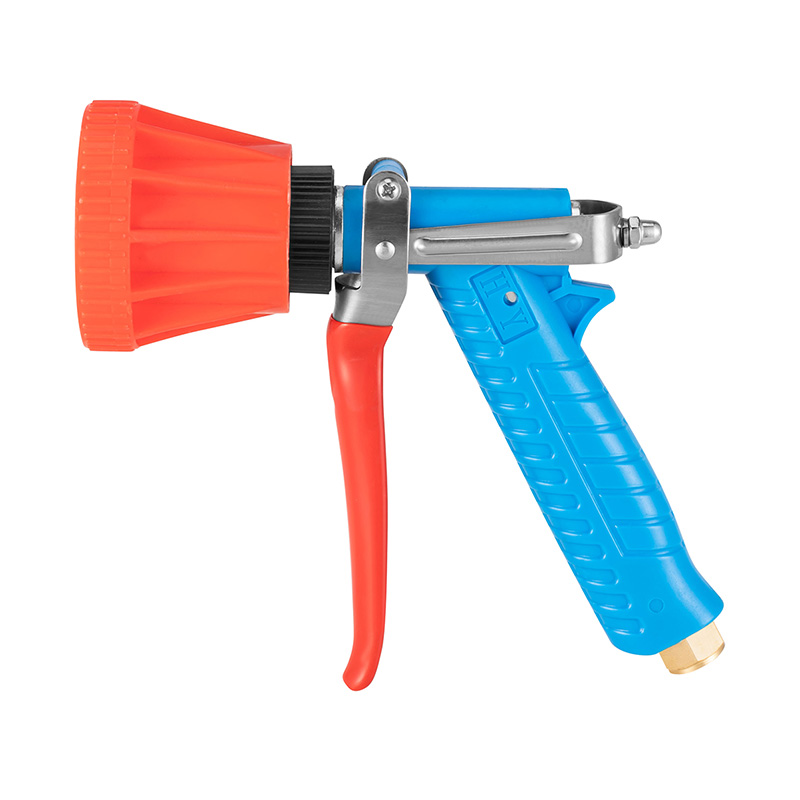
This ordinary short windproof agricultural high-pr...
See Details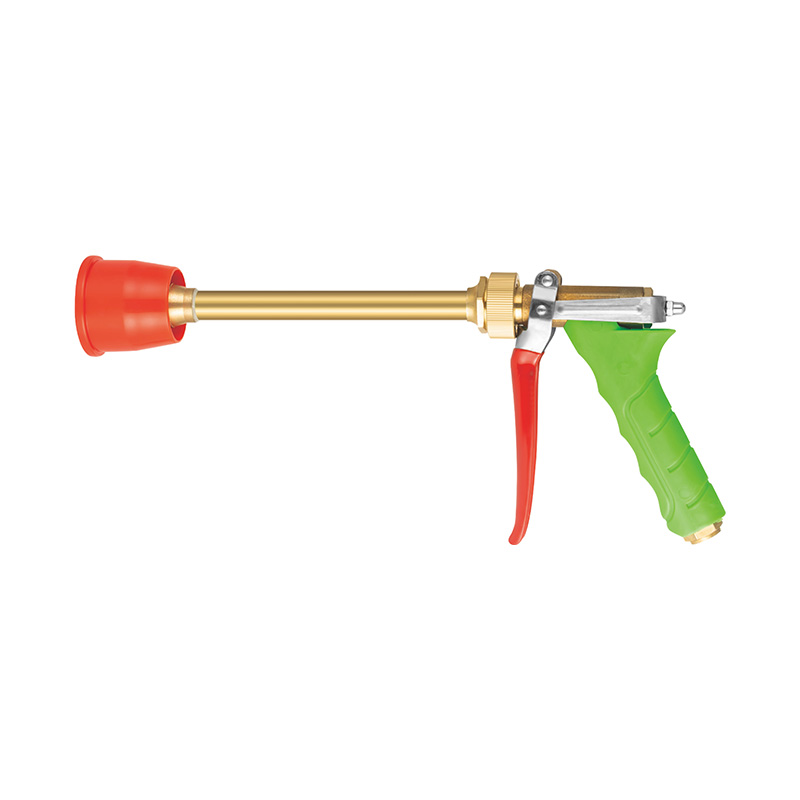
Dear customer, I am pleased to introduce to you th...
See DetailsContinuous innovation
We firmly believe that through continuous development, our products will be able to adapt to the changing market environment, and we can provide users with better and more reliable solutions.
let’s talk